Florida's year-round tourism traffic — from Orlando hotels to Miami Beach vacation rentals — makes the state one of the country's highest-risk bed bug zones. Tier 1's systematic chemical approach eliminates bed bug infestations at every life stage — from eggs to adults — with HEPA vacuuming, EPA-approved residual insecticides, IGR applications, and follow-up monitoring until your home is completely clear.
Florida's massive tourism industry — anchored by Orlando, Miami, Tampa, and Naples — drives some of the highest bed bug introduction rates in the country. Millions of hotel stays and vacation rentals each year mean bed bugs are constantly hitchhiking home in luggage and garment folds. The state's snowbird population compounds the problem: seasonal residents arriving October–November and departing April–May create twice-yearly introduction waves that keep Florida consistently on the national bed bug radar.
In Florida, the most common introduction sources are vacation rentals and Airbnbs in tourist corridors like Miami Beach, Clearwater Beach, Fort Lauderdale, and the Orlando area. Used furniture picked up from Facebook Marketplace or left curbside is another major risk — bed bugs can survive months without a host, making second-hand pieces a reliable carrier. Multifamily apartment buildings are a particular concern: one infested unit can spread bugs to neighboring units within months through wall voids and shared plumbing chases.
Florida's wood-frame and stucco construction — common across Tampa, Sarasota, and South Florida — responds well to both chemical and heat treatment approaches. Heat treatment raises room temperature to 122–140°F for several hours, killing all life stages including eggs in a single visit. One practical advantage in Florida: most homes already have central AC systems that can be temporarily shut down to allow heat to build safely. Chemical treatment with residual insecticides and IGRs remains the go-to for situations where heat isn't practical, such as rooms with heat-sensitive electronics or artwork.
Tampa, St. Petersburg, Clearwater, Wesley Chapel, Brandon, Lakeland, Sarasota, Bradenton, Naples, Fort Myers, Cape Coral, Miami, Fort Lauderdale, West Palm Beach, Boca Raton
Bed bugs are small, reddish-brown parasitic insects that feed exclusively on blood — most often human blood taken while you sleep. They're one of the most resilient and difficult pests to eliminate without professional chemical treatment, but understanding how they operate is the first step to getting rid of them.
Act quickly. A single fertilized female bed bug can seed an entire infestation. Populations can double every 16 days under ideal conditions. The earlier you call, the faster and less costly eradication becomes.
A structured, multi-visit chemical approach designed to eliminate bed bugs at every life stage — adults, nymphs, and eggs.
Our technician conducts a detailed inspection of your entire home, systematically identifying all harborage areas and assessing infestation severity. We check mattress seams and piping, box spring interiors, headboard crevices, couch cushion folds, dresser drawers, baseboard gaps, outlet covers, and behind picture frames. Every potential hiding spot is documented before treatment begins — this step determines which areas receive the most intensive chemical attention.
Before any chemical application, we perform comprehensive HEPA vacuuming of all infested areas. This immediately removes visible live bugs, nymphs, eggs, shed skins, and fecal debris from mattress seams, box spring folds, baseboards, and furniture. HEPA filtration ensures captured bed bugs and eggs cannot escape. This step significantly reduces the population load before chemicals are applied, improving overall treatment efficacy and reducing the number of visits needed.
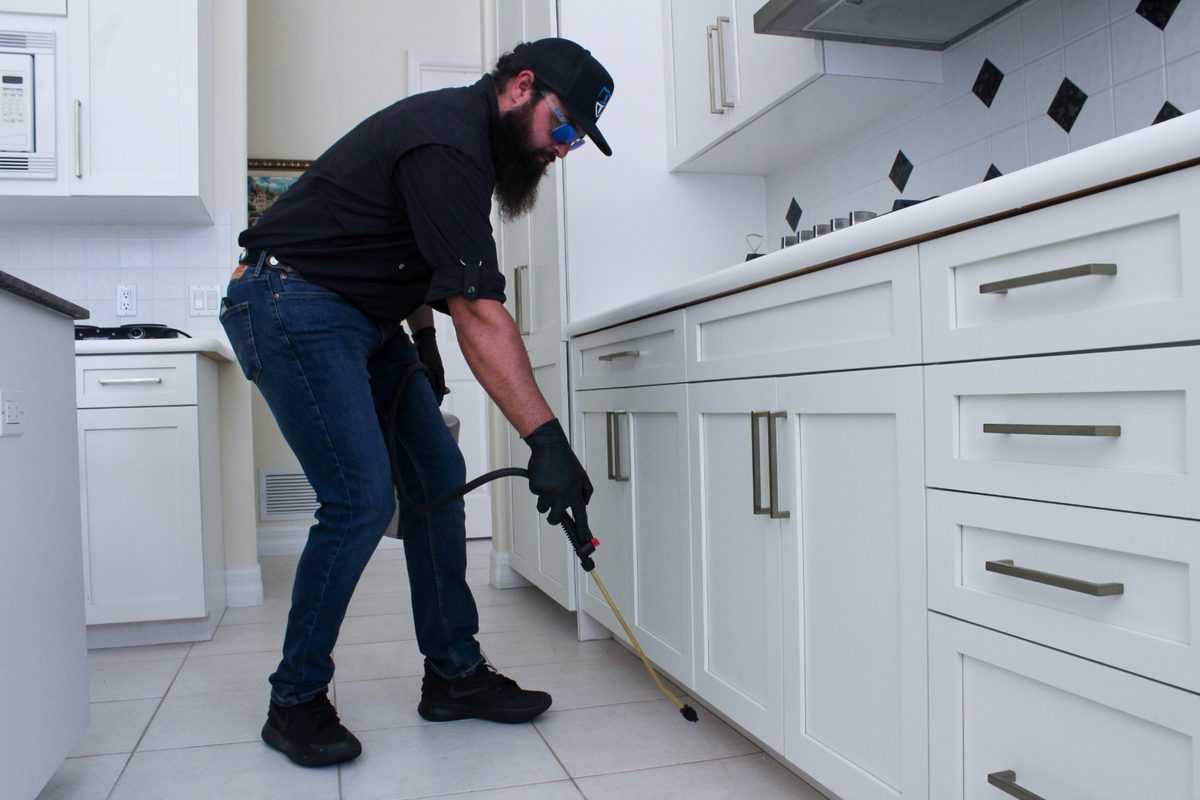
We apply EPA-approved residual insecticides with precision to every crack, crevice, seam, and harborage point identified during inspection. This includes mattress seams and tufts, box spring frames, headboard joints, baseboard edges, carpet edges, outlet covers, and furniture joints. In addition to contact-kill insecticides, we apply insect growth regulators (IGR) that disrupt the reproductive and molting cycle — preventing nymphs from reaching reproductive maturity and reducing future generations. Dust formulations are injected into wall voids, electrical boxes, and structural gaps where liquid products cannot reach.
Bed bug eggs are highly resistant to most insecticides and require follow-up treatments timed to the hatch cycle. We return every 7-14 days to repeat chemical applications, catching any newly hatched nymphs before they can reproduce. Most infestations are fully eliminated in 2-4 treatment visits. Between visits, we place insect monitors (interceptor traps) under bed legs and in key areas to verify population decline and confirm eradication. Follow-ups continue until monitors confirm zero activity.
Bed bugs are masters of concealment. These are the telltale indicators to watch for — if you notice any of these, call us immediately.
Rows or clusters of small, red, itchy welts on arms, neck, shoulders, or back — typically appearing overnight. Bed bug bites often follow a "breakfast, lunch, dinner" line pattern as the bug feeds along exposed skin.
Small rust-colored or reddish-brown smears on your sheets, pillowcase, or mattress — caused by accidentally crushing a recently fed bed bug or by the bug's fecal matter after digesting blood.
Small, dark brown or black dots — about the size of a felt-tip marker point — clustered along mattress seams, piping, tufts, or the headboard. These are bed bug fecal deposits and are a reliable indicator of active harborage.
Adult bed bugs are visible to the naked eye — about the size and shape of an apple seed, flat, oval, and reddish-brown. They're most often found tucked into mattress seams, along box spring edges, or behind headboard joints.
Bed bugs molt (shed their exoskeleton) five times as they mature. These translucent, hollow cast skins are left behind in harborage areas and are a reliable sign of an established infestation with multiple life-stage bugs present.
A heavily infested room may have a distinctive musty, sweetish odor — sometimes compared to coriander or overripe raspberries. This scent is produced by bed bug pheromones and is most noticeable in confined spaces with large populations.
Bed bugs stay within 8 feet of their host. Here's every harborage point our technicians inspect and treat during a service visit.
Not all bed bug treatments are equal. Our systematic chemical protocol, follow-up commitment, and monitoring verification set us apart from one-and-done services that leave eggs behind.
Our protocol targets bed bugs at every life stage. Residual insecticides kill on contact and continue working for weeks. IGR applications disrupt reproduction cycles. Dust formulations reach into wall voids and structural gaps that liquid sprays miss. No life stage is left untreated.
We don't just treat and hope. After each visit, insect monitors are placed under bed legs and along harborage routes. These passive monitoring devices catch any surviving or newly hatched bugs, giving us — and you — tangible evidence of progress and confirmation of eradication.
Our follow-up visits are deliberately spaced 7-14 days apart to align with the bed bug egg hatch cycle. Eggs that survive the first treatment hatch into vulnerable nymphs that are killed on contact with residual insecticide still active from the previous visit — breaking the reproductive chain.
Tier 1 Pest Solutions holds active Florida pest control licenses (JB321482 | JE132152) and carries full liability insurance. Every technician is trained, certified, and background-checked. You get a professional service backed by proper credentials — not a handyman with a spray can.
We understand the privacy concerns that come with a bed bug situation. Our technicians arrive in professional attire, carry equipment discreetly, and are available in unmarked vehicles upon request. We treat every customer's home with the same care and confidentiality we'd give our own.
We treat until the infestation is gone — period. Our treatment protocol includes follow-up visits as part of the service, not as upsell add-ons. If bed bug activity continues after the expected number of visits, we work with you to determine next steps at no additional charge.
Common questions about our bed bug treatment services in South Florida.
Fill out the form and we'll reach out to schedule your inspection and first treatment. The sooner we start, the faster your home is bed-bug-free. Or give us a call and we'll answer any questions you have — no pressure, no obligation.
Our bed bug treatment technicians cover the full South Florida region. Not sure if we're in your area? Give us a call — we're always expanding.
Don't see your city? Call us at (813) 548-6341 — we're always expanding our coverage area.